14 – 18 September · 4 Nights, 5 Days
Five days in Switzerland
Basel → Bern → Lucerne → Lauterbrunnen → Grindelwald → Zurich
Base camp: Lucerne · four nights · 14–18 Sept 2026
Cross in at Basel on Monday the 14th, run down to Bern and walk the old town while your legs are still fresh, then take the hour-long train east to Lucerne and stay put for four nights. Everything after that is a day trip that starts and ends at Luzern Bahnhof — no repacking, no hotel-hopping, three full days in the mountains. Leave from Zurich on the last morning.
Four nights in Lucerne, ideally within ten minutes' walk of the Bahnhof — every morning starts with a train or a boat from there. Basel and Bern are the morning and afternoon of the way in; Zurich is a half-day on the way out. Nothing in the plan needs a car, and you unpack exactly once.
It sits at the hinge of the country. Interlaken is 1h50 away on the Brünig line, Zurich is 50 minutes, Mount Rigi and Pilatus rise straight out of the lake at the edge of town, and Engelberg–Titlis is 45 minutes. No other base gives you this much within a two-hour radius.
Point-to-point, approx.
≈475 CHF
Basel–Bern 26 · Bern–Luzern 42 · Rigi round trip ≈125 · Luzern–Interlaken return ≈66 · Lauterbrunnen & Mürren ≈37 · Grindelwald return ≈76 · First cliff walk ≈72 · Luzern–Zurich 27 · Zurich HB–Airport 6.80. Second class, full fare, per person.
Point-to-point comes to roughly 475 CHF across the five days. At this length a Swiss Travel Pass starts to win outright: it covers every train and boat here, city transport in all three cities, most museums and the Rigi cogwheel in full, with 50% off the Grindelwald and Jungfrau mountain railways. Take a 6-day consecutive pass, or a 4-day Flex if you plan to spend one day on foot in Lucerne and not move.
If you would rather not commit, the Half Fare Card halves nearly everything for a flat fee and is the cheaper option the moment you skip one mountain.
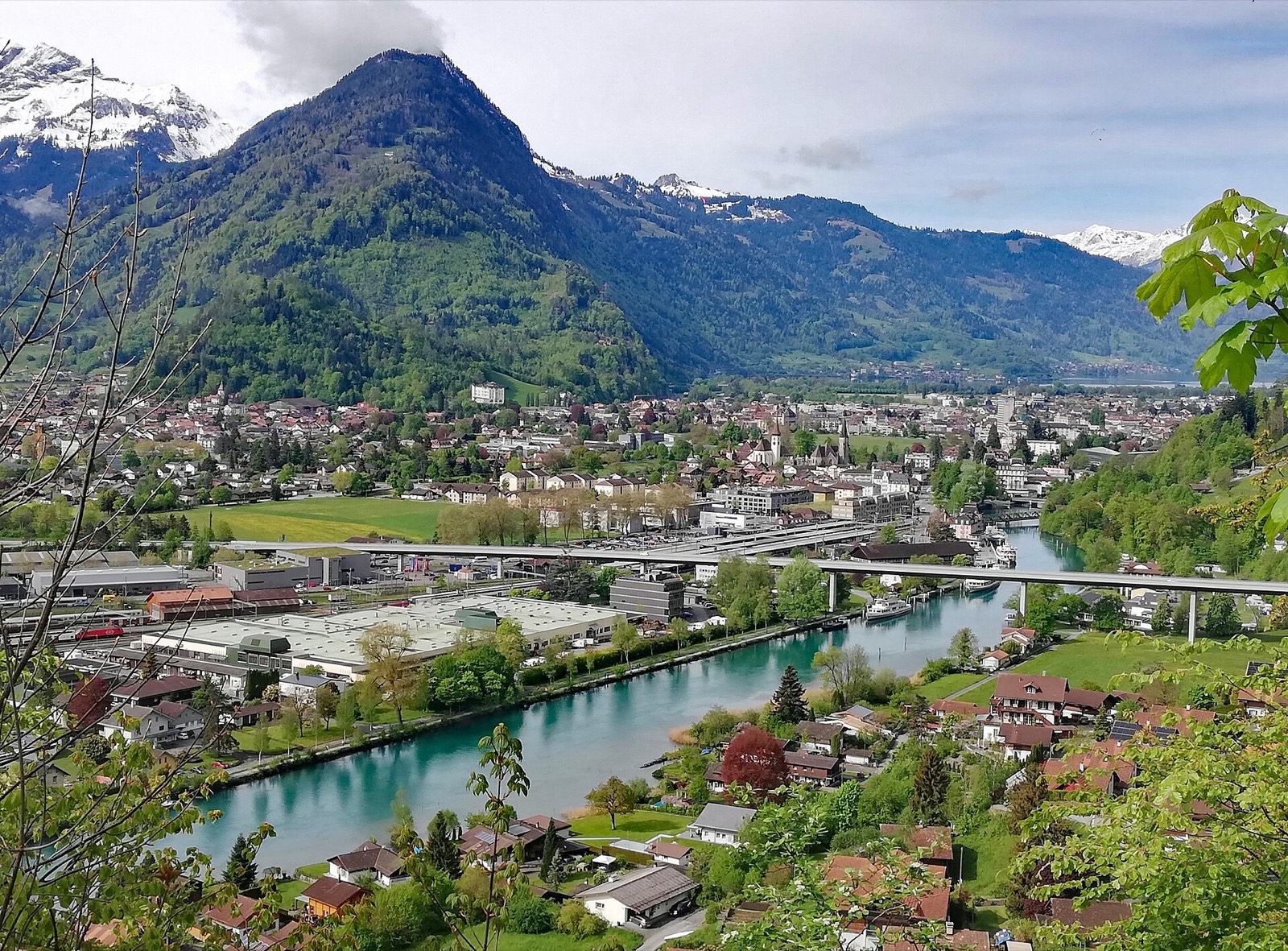
Clear Basel and get to Basel SBB — the Swiss half of the station, signed for domestic departures. Trains to Bern leave twice an hour and take just under an hour.26 CHF
An hour spare in Basel is well spent on the Mittlere Brücke and the terrace behind the red sandstone Münster, ten minutes' tram from the station. Otherwise ride straight through.
Bags into the lockers at Bern Bahnhof, lower level. The old town starts fifty metres from the exit and you do not want to be dragging a suitcase over cobbles.from 6 CHF
Walk the length of the old town in one straight line: Spitalgasse under six kilometres of covered arcades, the Zytglogge clock tower putting on its little mechanical show four minutes before the hour, then Kramgasse past Einstein's flat at number 49.
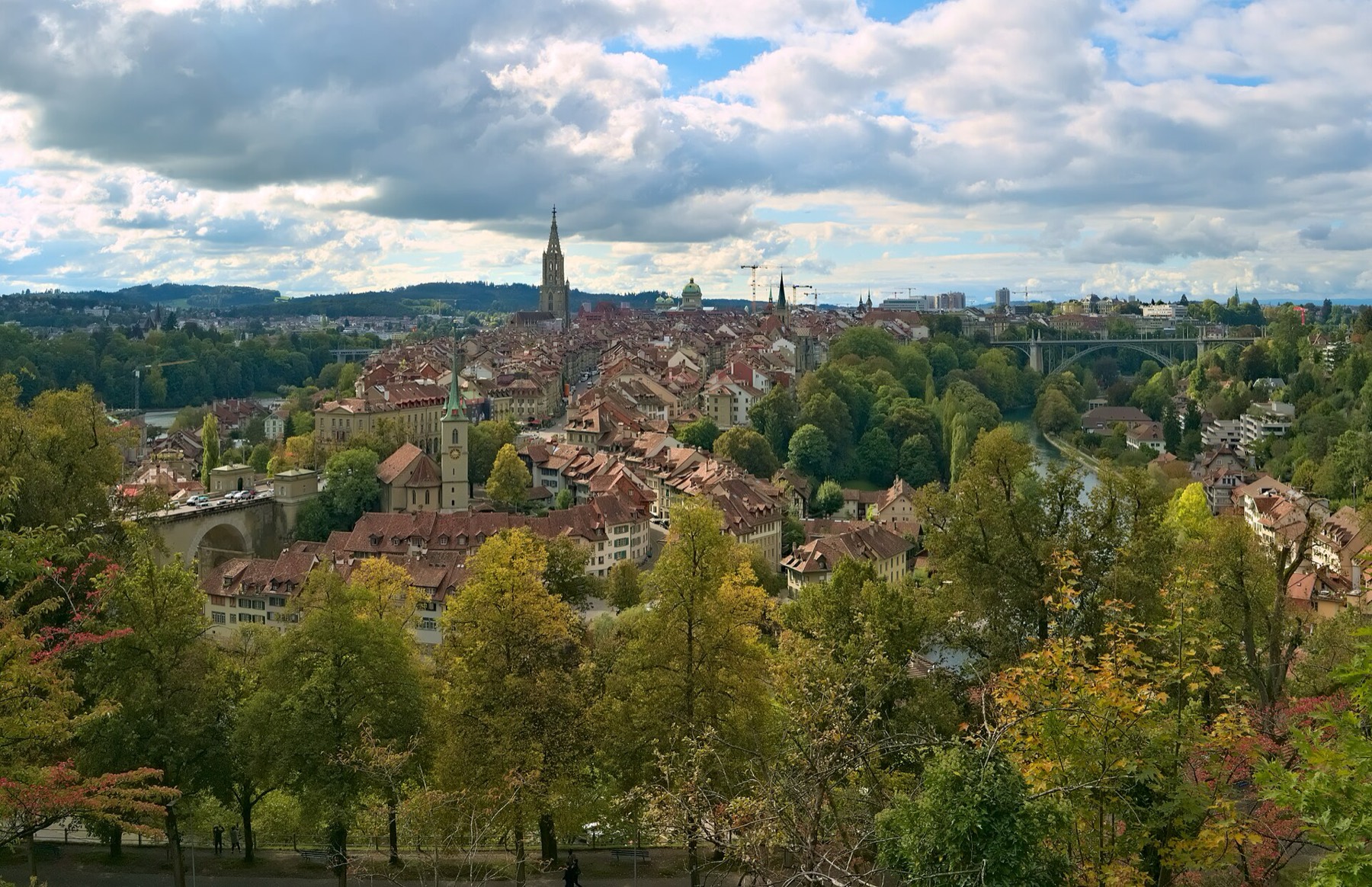
Down to the Münster terrace for the first proper view of the Aare, then over the Nydeggbrücke to the BearPark and up the switchbacks to the Rosengarten. That is the photograph — the whole medieval peninsula inside a loop of green river.
Eat on the Rosengarten terrace or back down in the Marktgasse arcades. Keep it quick; the train matters more than the meal today.
Collect the bags and take the IR26 to Luzern — one hour, hourly, no changes, and the second half runs along the Emmental hills.42 CHF
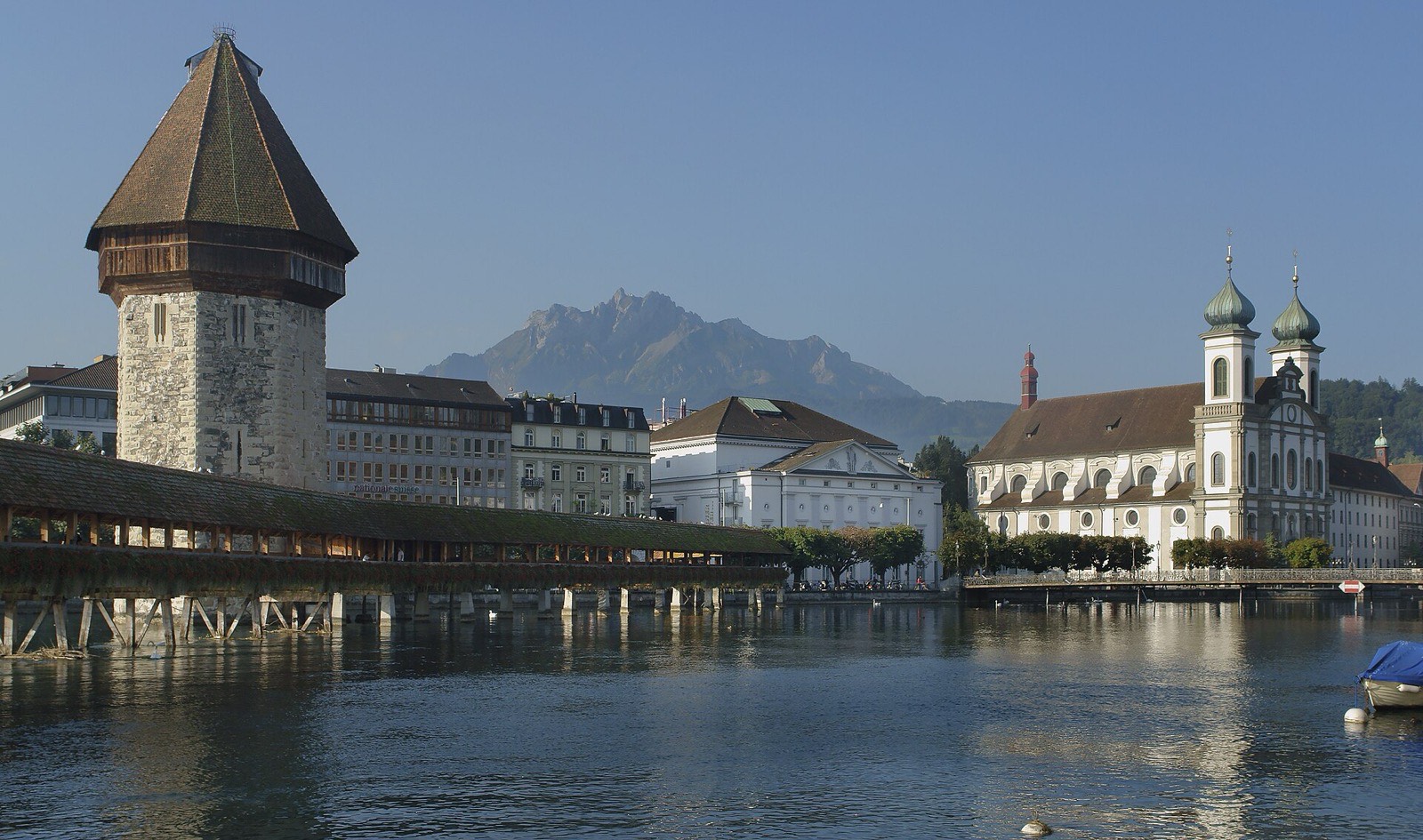
Check in, then walk the Kapellbrücke at dusk when the flower boxes are lit and the day-trippers have gone. Dinner on the Rathausquai, and a slow lap of the lake promenade before bed.
Lucerne — night one of four.
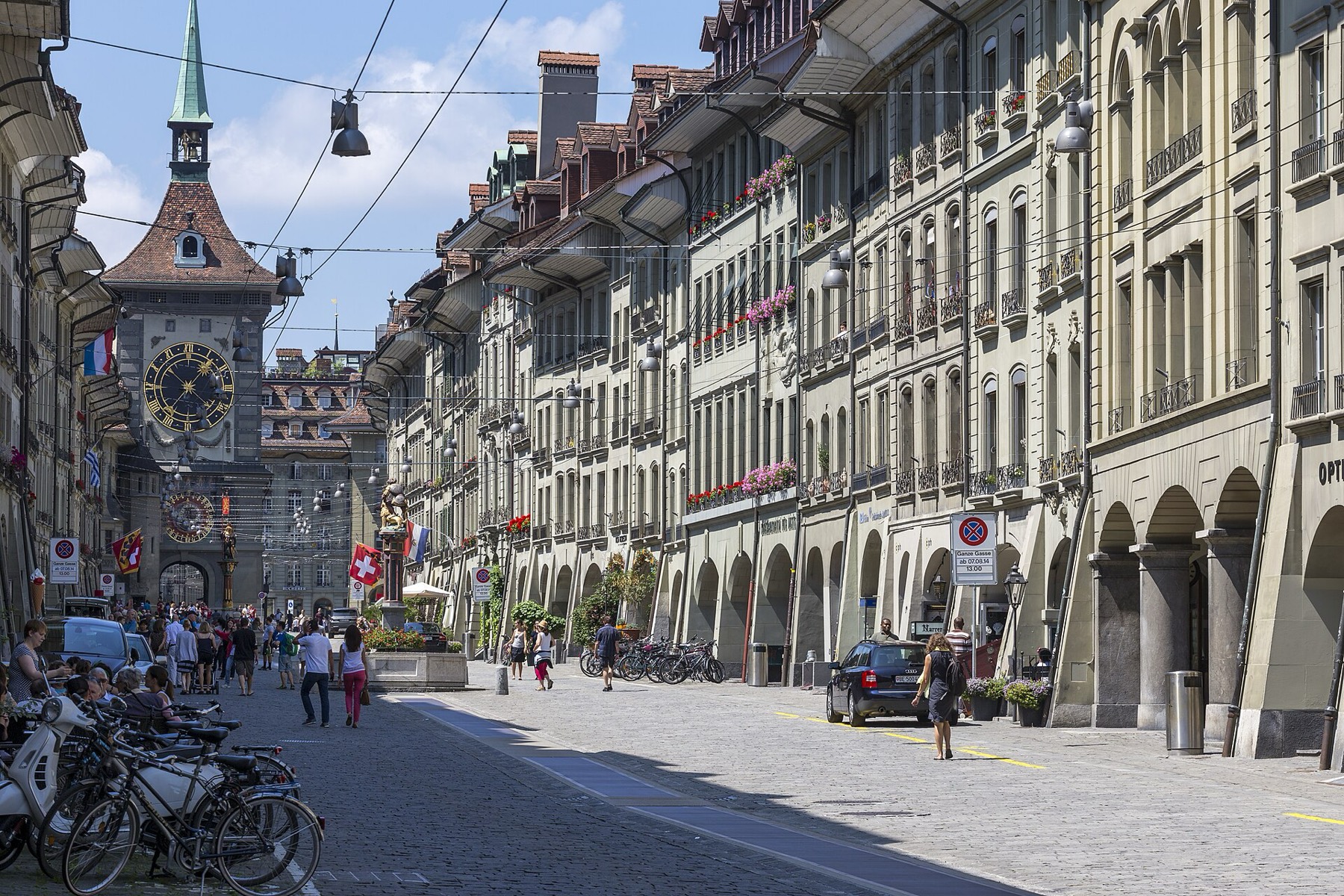
Zytglogge · Kramgasse
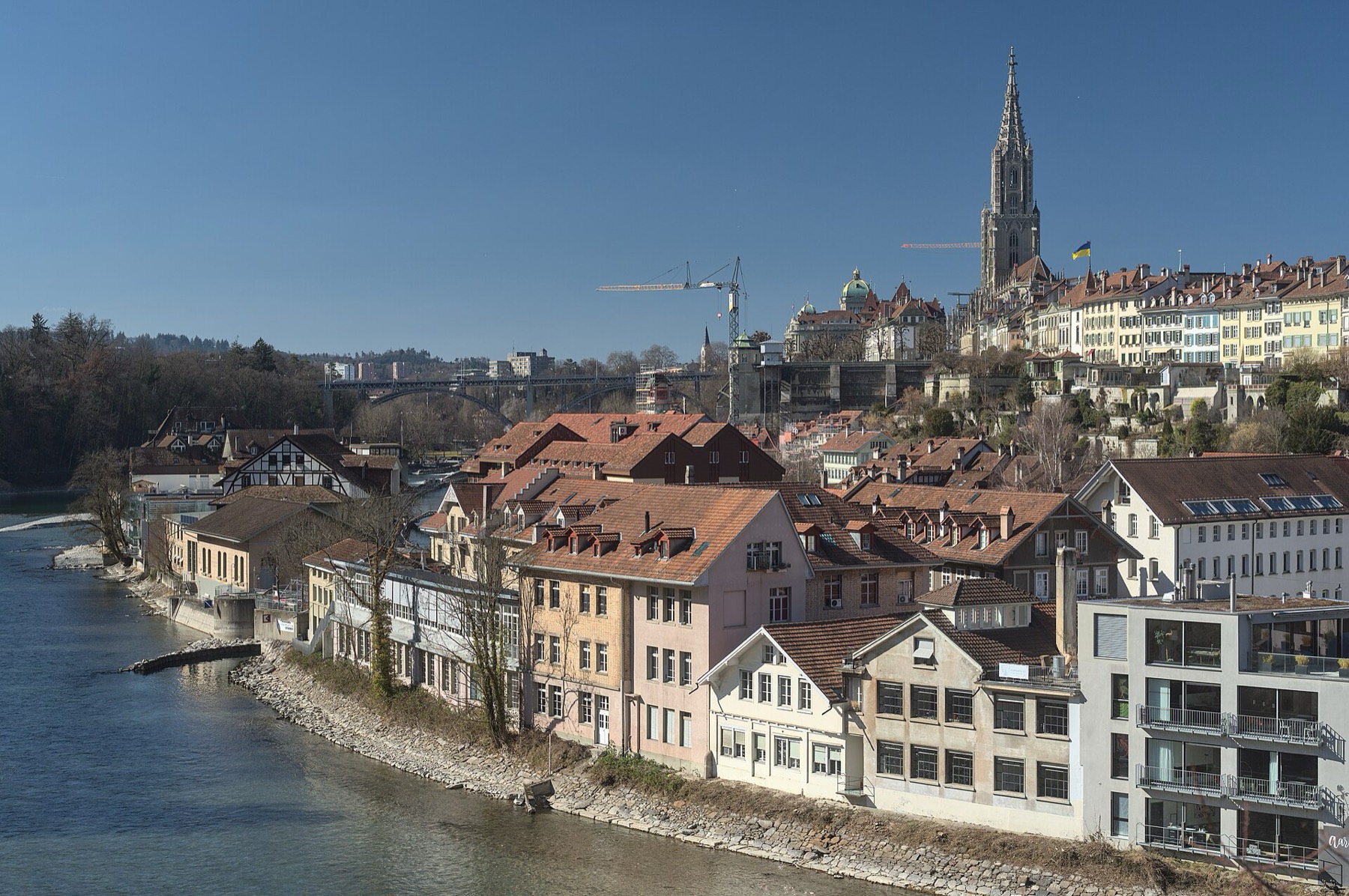
The Aare loop
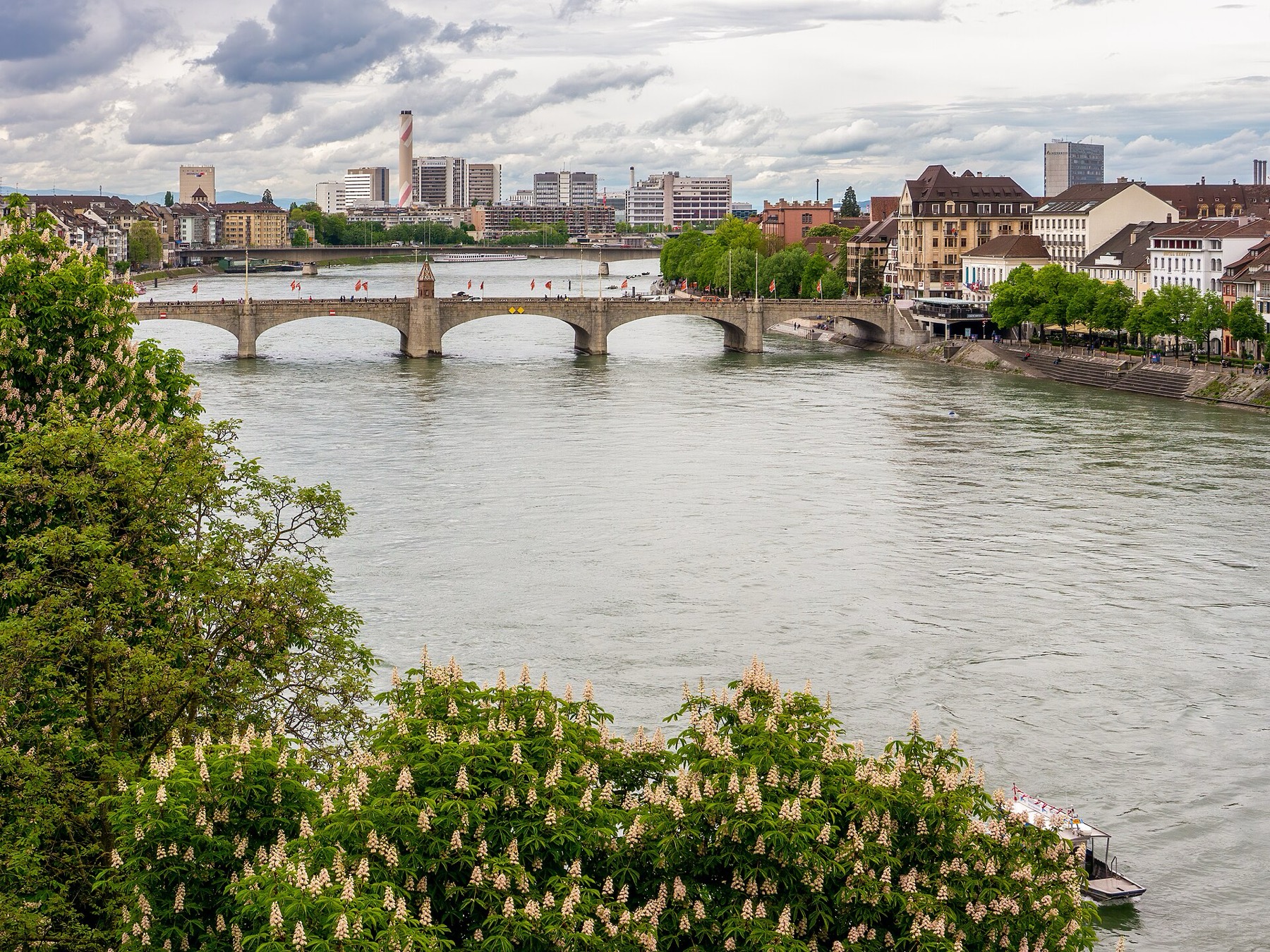
Basel · the crossing
Bern old town survives a compressed visit. Zytglogge, Kramgasse and the Münster terrace is a 45-minute walk end to end and still worth doing at seven in the evening — the arcades are lit and the crowds are gone. Trains from Bern to Lucerne run hourly until roughly midnight, so a late crossing at Basel costs you Bern in daylight, not the bed in Lucerne.
Breakfast, then straight to the quay outside the station. The paddle steamer to Vitznau takes about an hour across Lake Lucerne and is the best-value hour of the trip — open deck, cliffs on both sides.
At Vitznau, the Rigi Bahn — Europe's oldest mountain railway, running since 1871 — climbs to Rigi Kulm at 1,798 m in half an hour. On a clear day you see thirteen lakes and the whole Bernese Oberland skyline.Golden Round Trip ≈125 CHF
Walk the ridge down to Rigi Staffel or Rigi Kaltbad — 40 to 70 easy minutes, mostly grass and cowbells. Lunch at Kaltbad, then the cable car down to Weggis.
Boat back to Lucerne from Weggis, which closes the loop by water rather than doubling back. Ashore by mid-afternoon.
The city, unhurried: the Lion Monument, the covered Spreuerbrücke with its plague-era Dance of Death panels, and the Musegg Wall — nine towers, four you can climb, free, with the best rooftop view in town.
Dinner in the Altstadt around Weinmarkt or Hirschenplatz, under the painted facades.
Lucerne — night two of four.
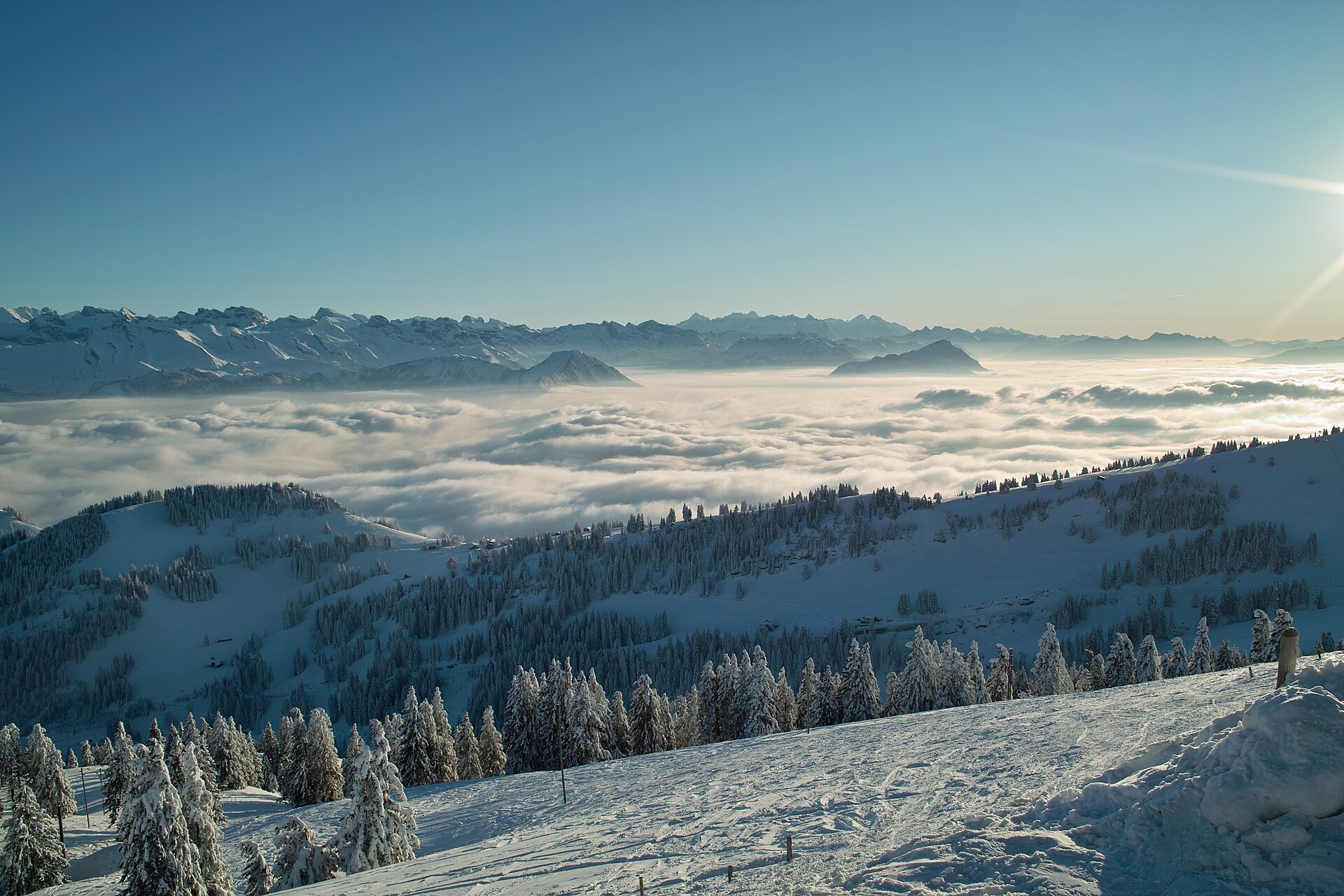
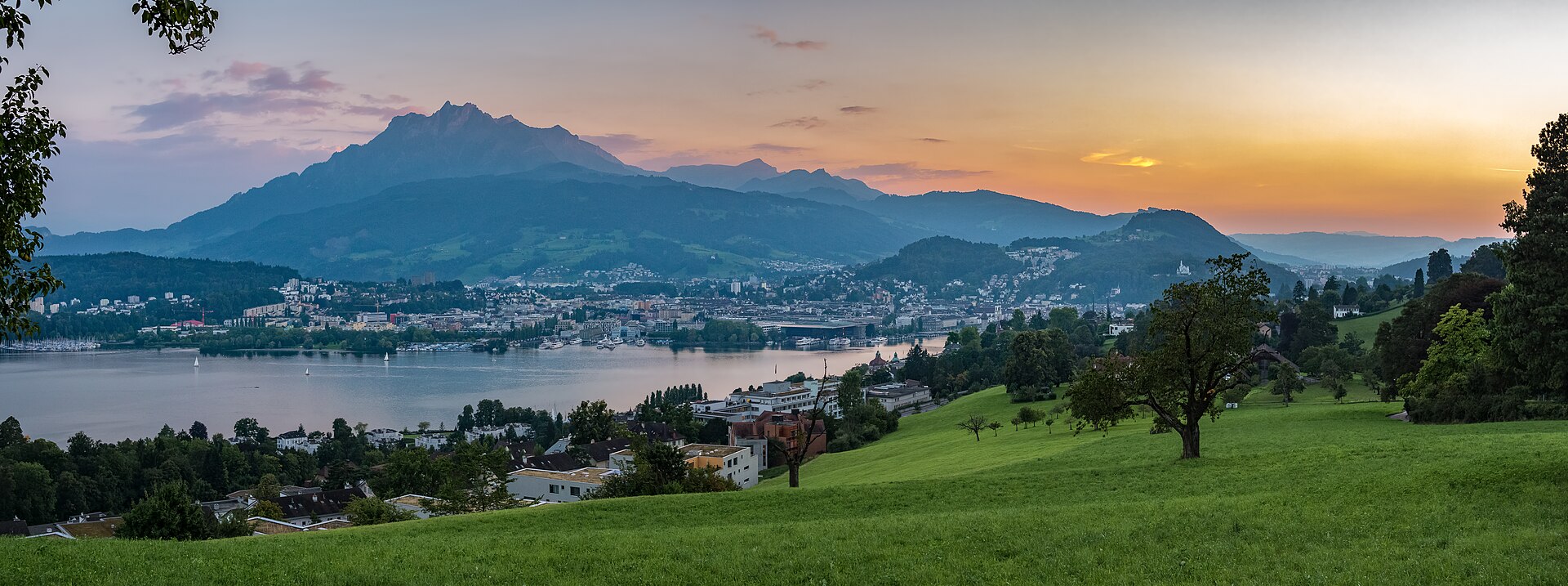
Lake Lucerne · Pilatus
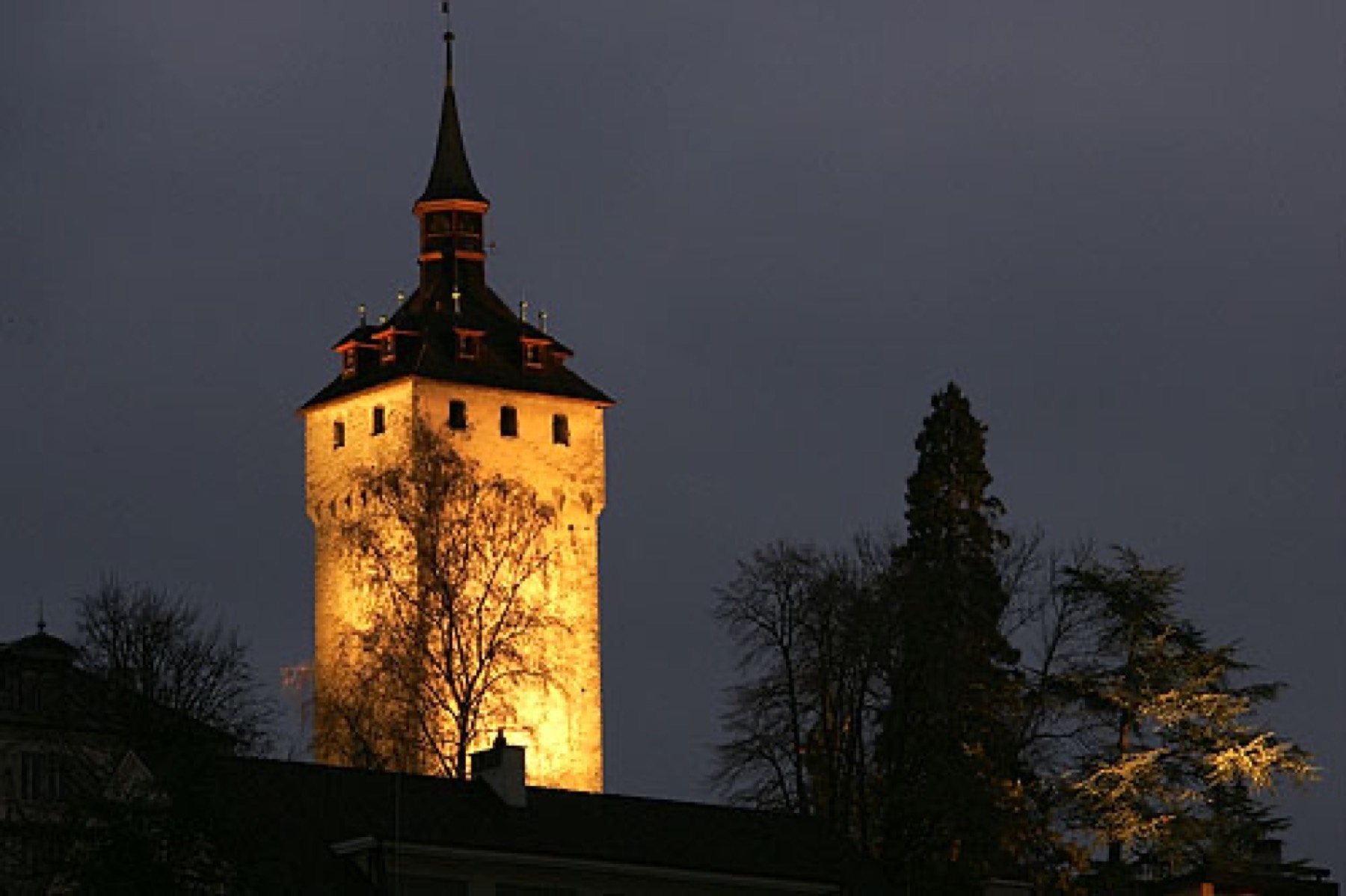
Musegg Wall · after dark
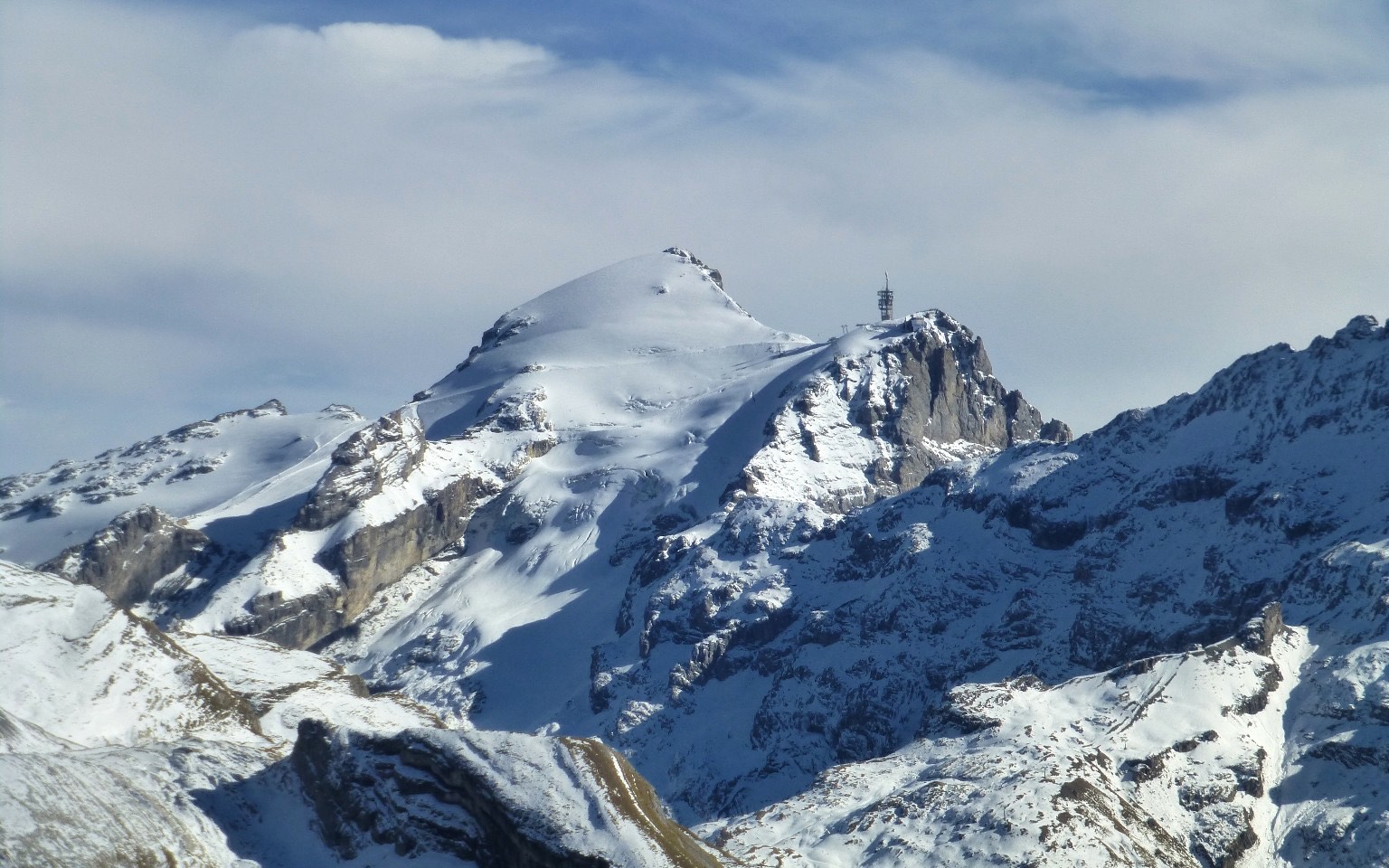
Titlis · the snow alternative
Pilatus instead of Rigi if you want the theatrics — boat to Alpnachstad, the world's steepest cogwheel railway at 48%, cable cars down to Kriens (the cogwheel section runs roughly May to November). Titlis instead if you want snow in any month — 45 minutes by train to Engelberg, then the rotating gondola onto the glacier at 3,020 m. Rigi is the pick for a clear day and easy walking; Titlis is the pick when the forecast is poor lower down.
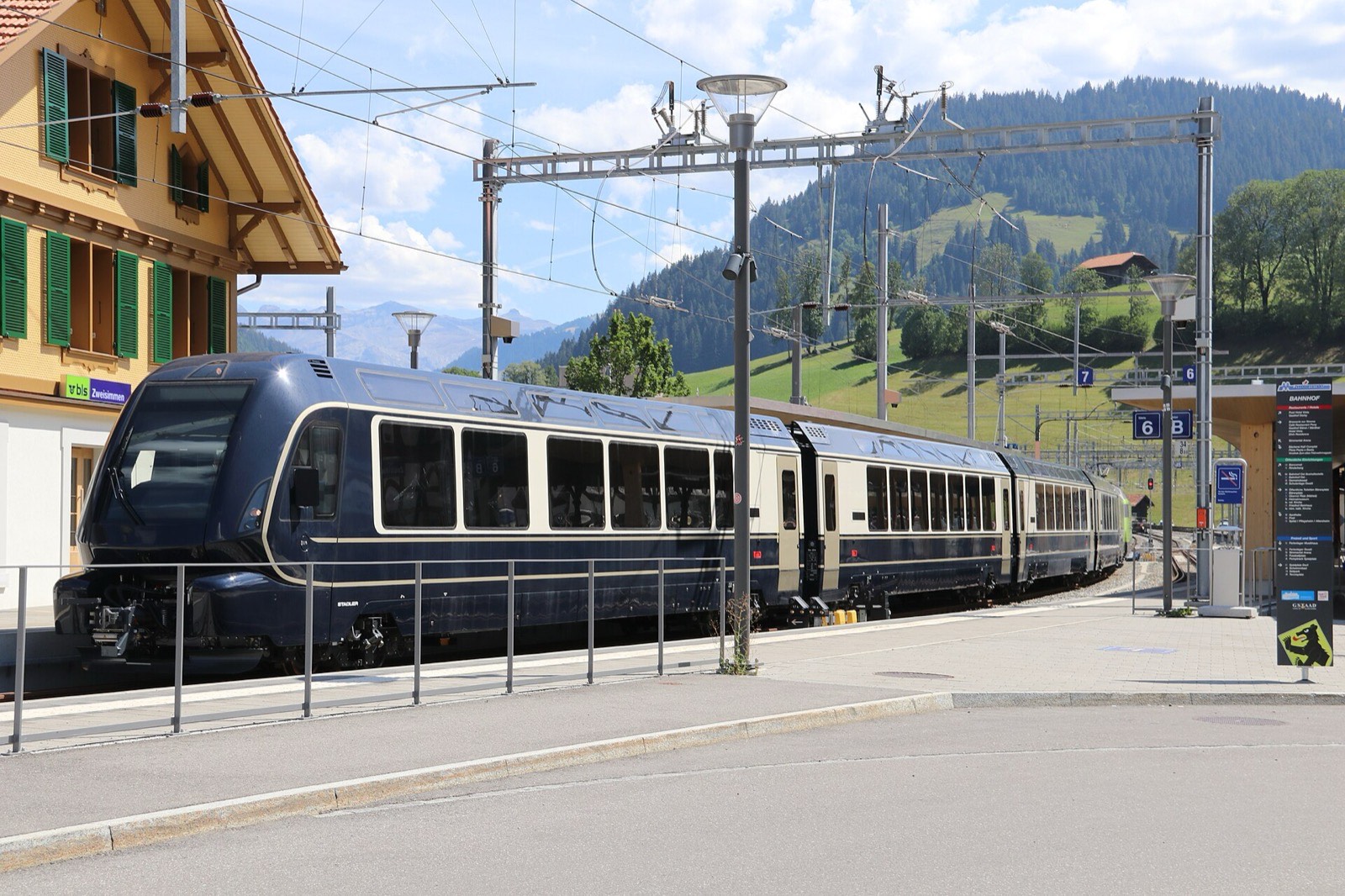
Catch the Luzern–Interlaken Express. It is a scenic line at a normal fare — no supplement, just reserve a seat if you can. Over the Brünig Pass, past Sarnen and Lungern's absurdly turquoise lake, then down the length of Lake Brienz.≈33 CHF each way
Arrive Interlaken Ost and change straight onto the valley train to Lauterbrunnen — twenty minutes into a trench of vertical rock with seventy-two waterfalls falling into it.
Walk to the foot of the Staubbach Falls, nearly 300 m of water that turns to mist before it lands, and on to the Trümmelbach Falls — ten glacier-fed cascades cut inside the mountain, reached by a lift bored through the rock.≈14 CHF
The cable car and mountain train up to Mürren, a car-free village on a shelf 800 m above the valley floor, staring straight across at the Eiger, Mönch and Jungfrau. This is the countryside you came for.≈22 CHF return
Back down and, if the light is holding, the short hop to Iseltwald on Lake Brienz — a stone jetty, a turquoise bay, and about four buildings.
Return on the Brünig line to Lucerne. Check the last departure from Interlaken Ost before you go up any mountain — evening services thin out fast.
Lucerne — night three of four.
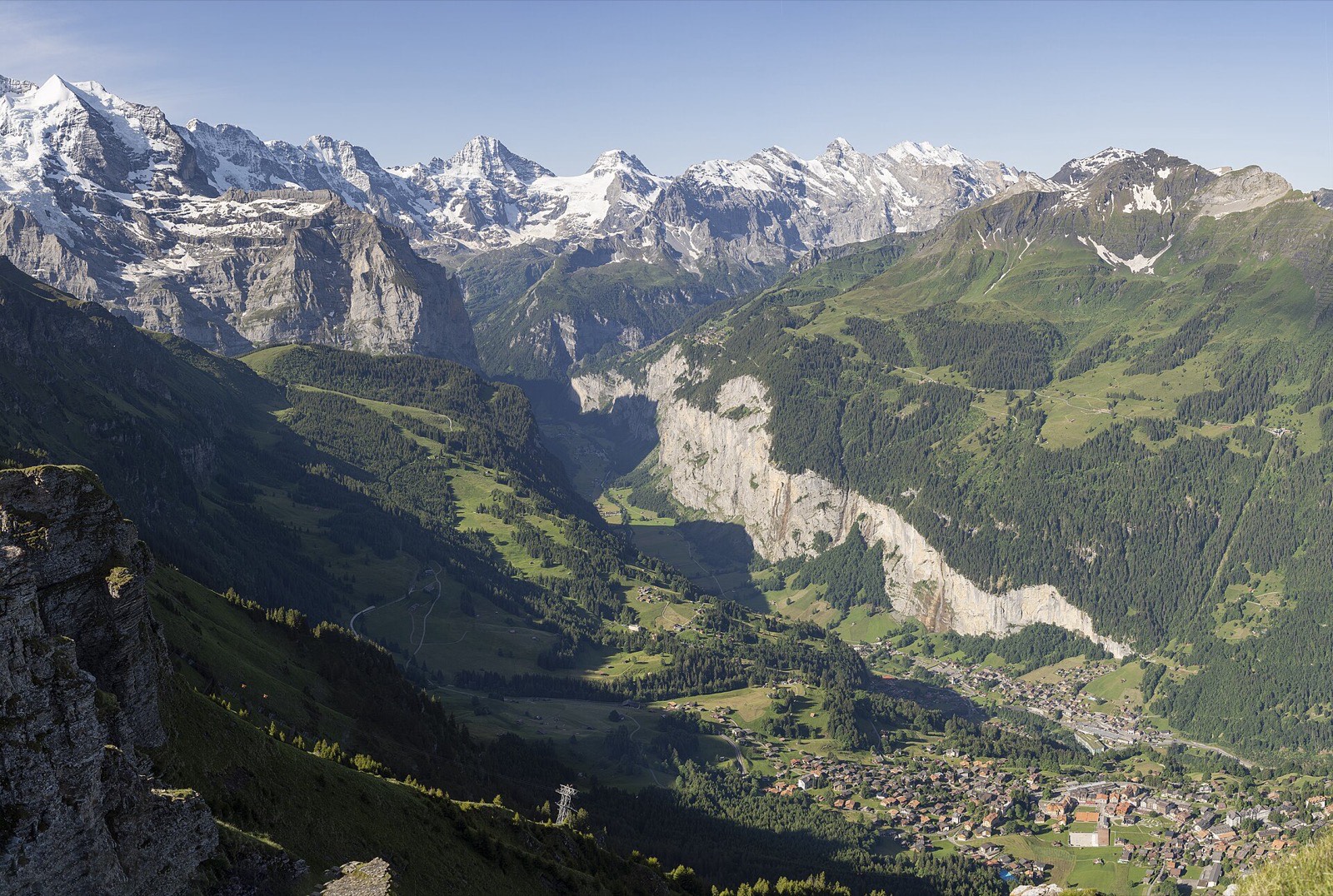
Lauterbrunnen · Staubbach
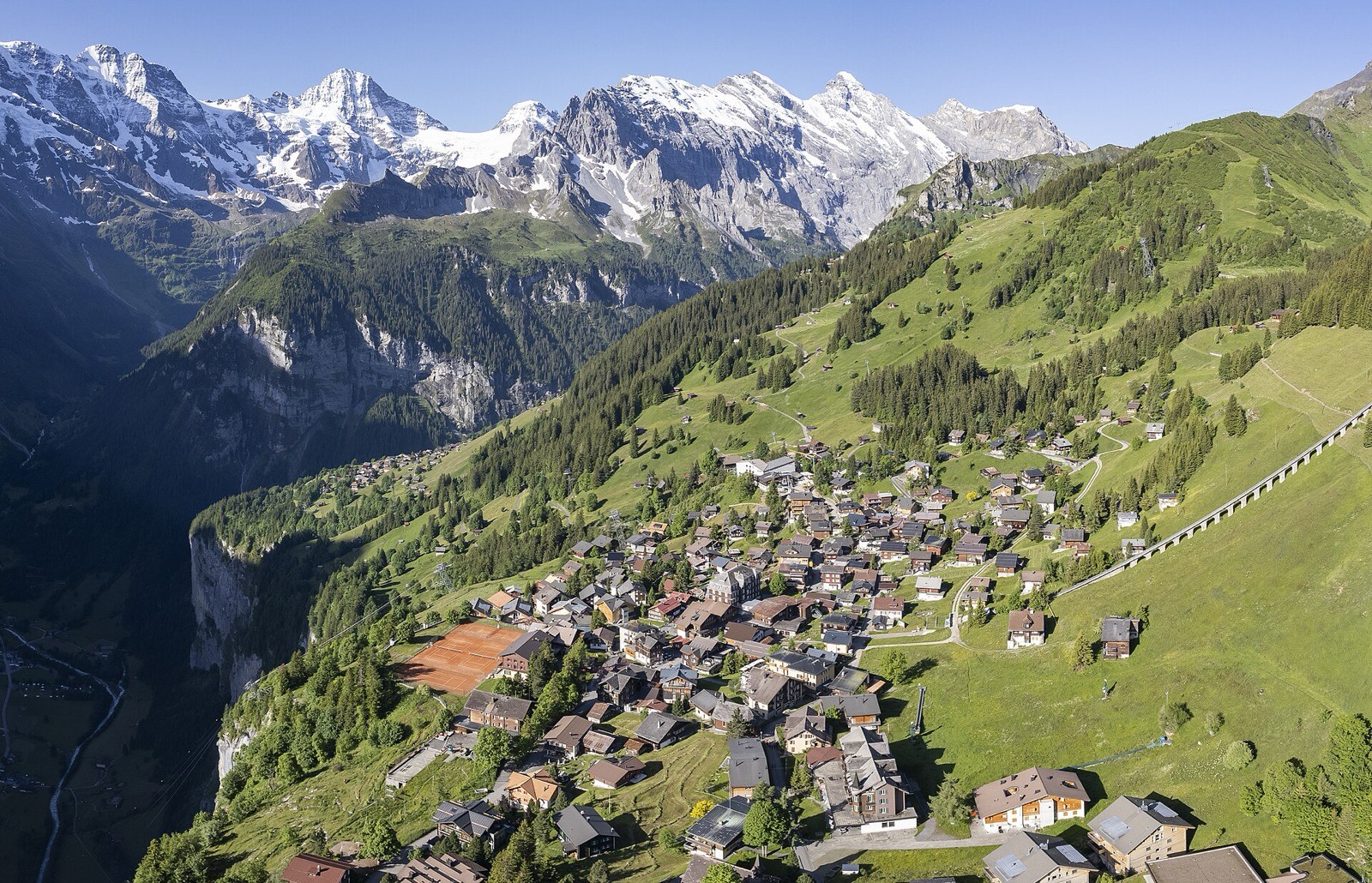
Mürren · car-free
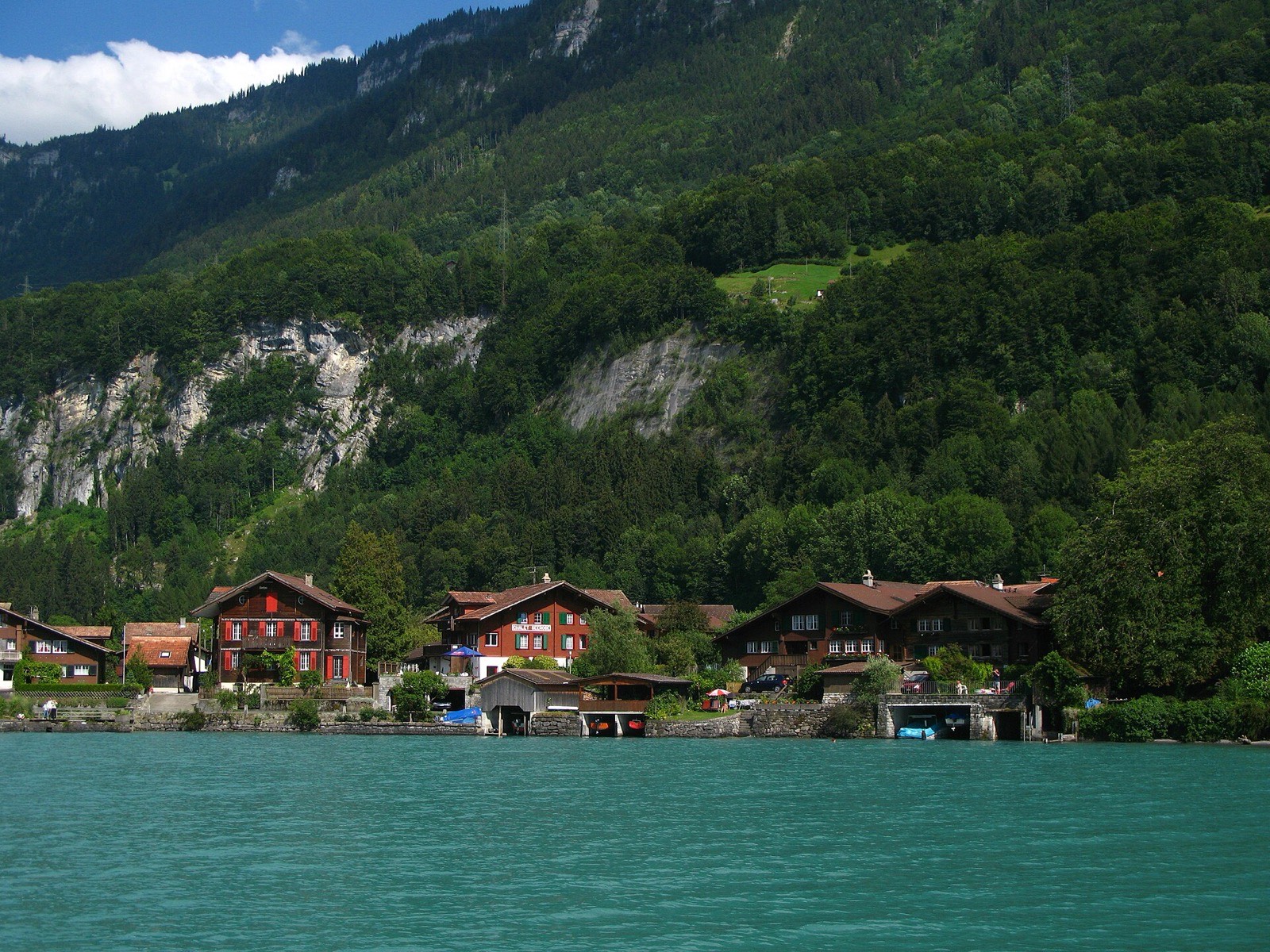
Iseltwald · Lake Brienz
Lauterbrunnen · the trench
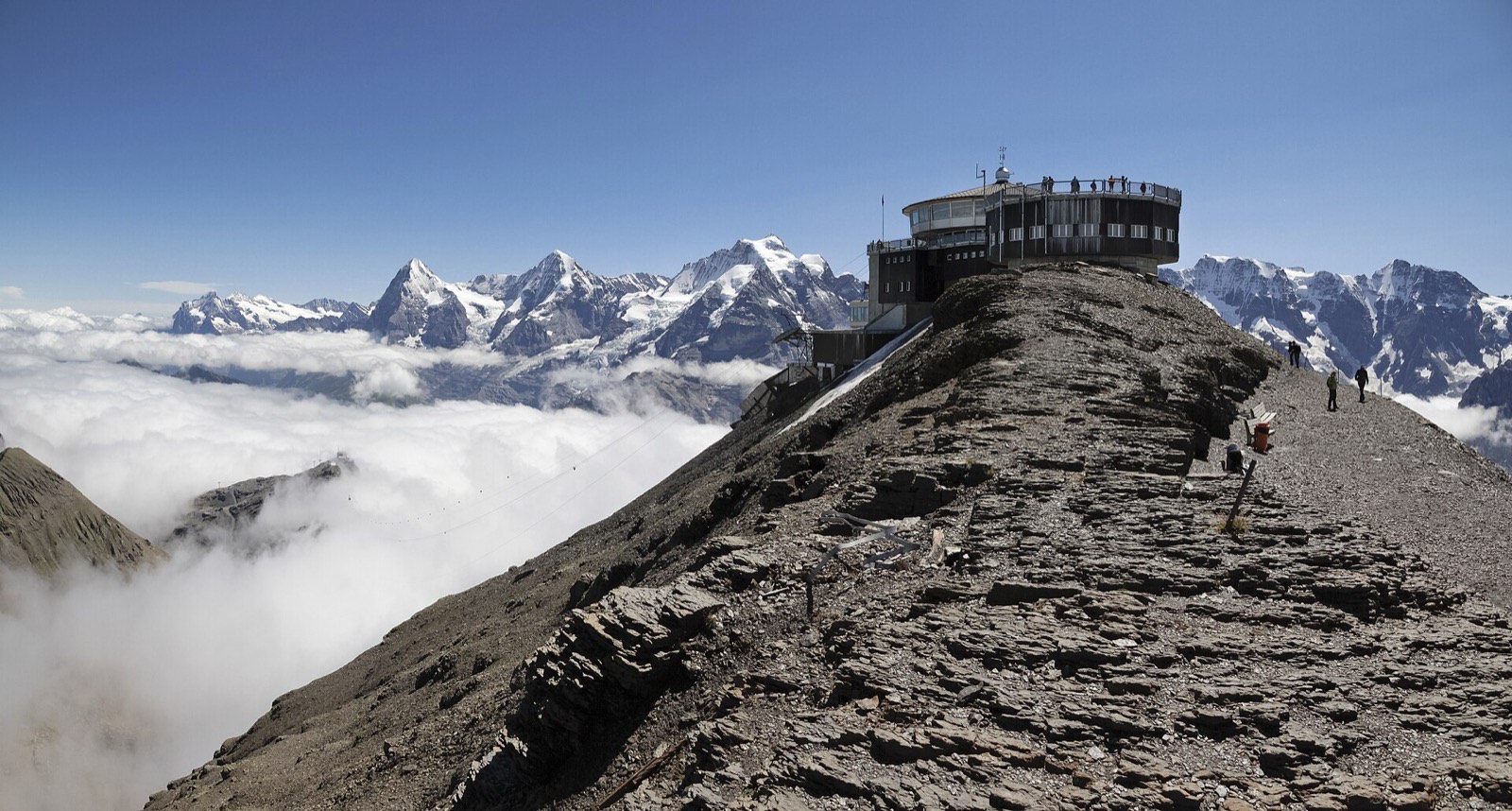
Schilthorn · above Mürren
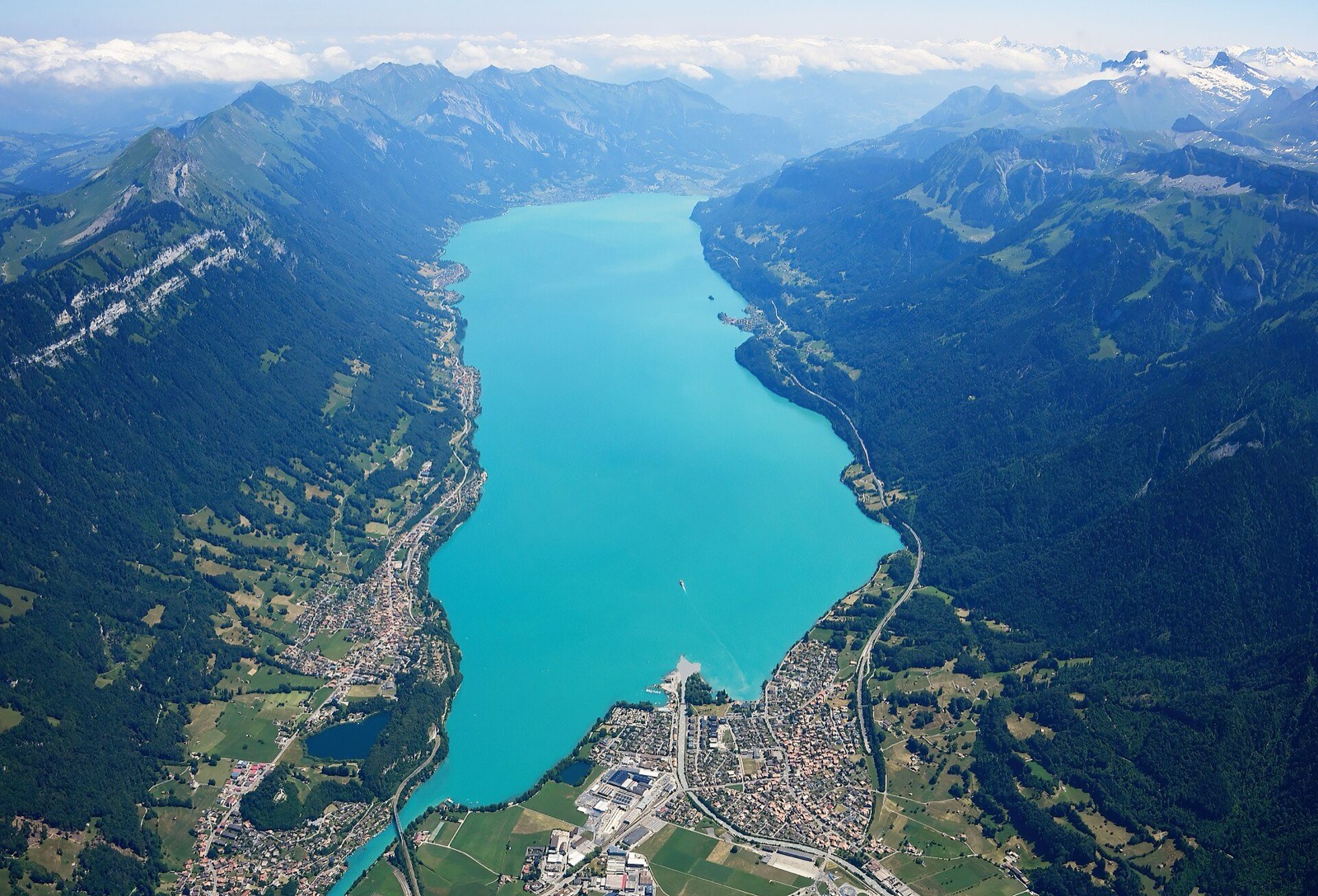
Lake Brienz · the ride home
Lauterbrunnen and Grindelwald are the two arms of the same valley system and each deserves its own day — which is exactly what the fourth night buys you. Do not try to fold them together: that leaves you with two train windows and no walking. If you would rather spend the extra day differently, Jungfraujoch from Grindelwald is a genuine full day at roughly 200 CHF on top, and Titlis from Engelberg is the shorter, snowier substitute.
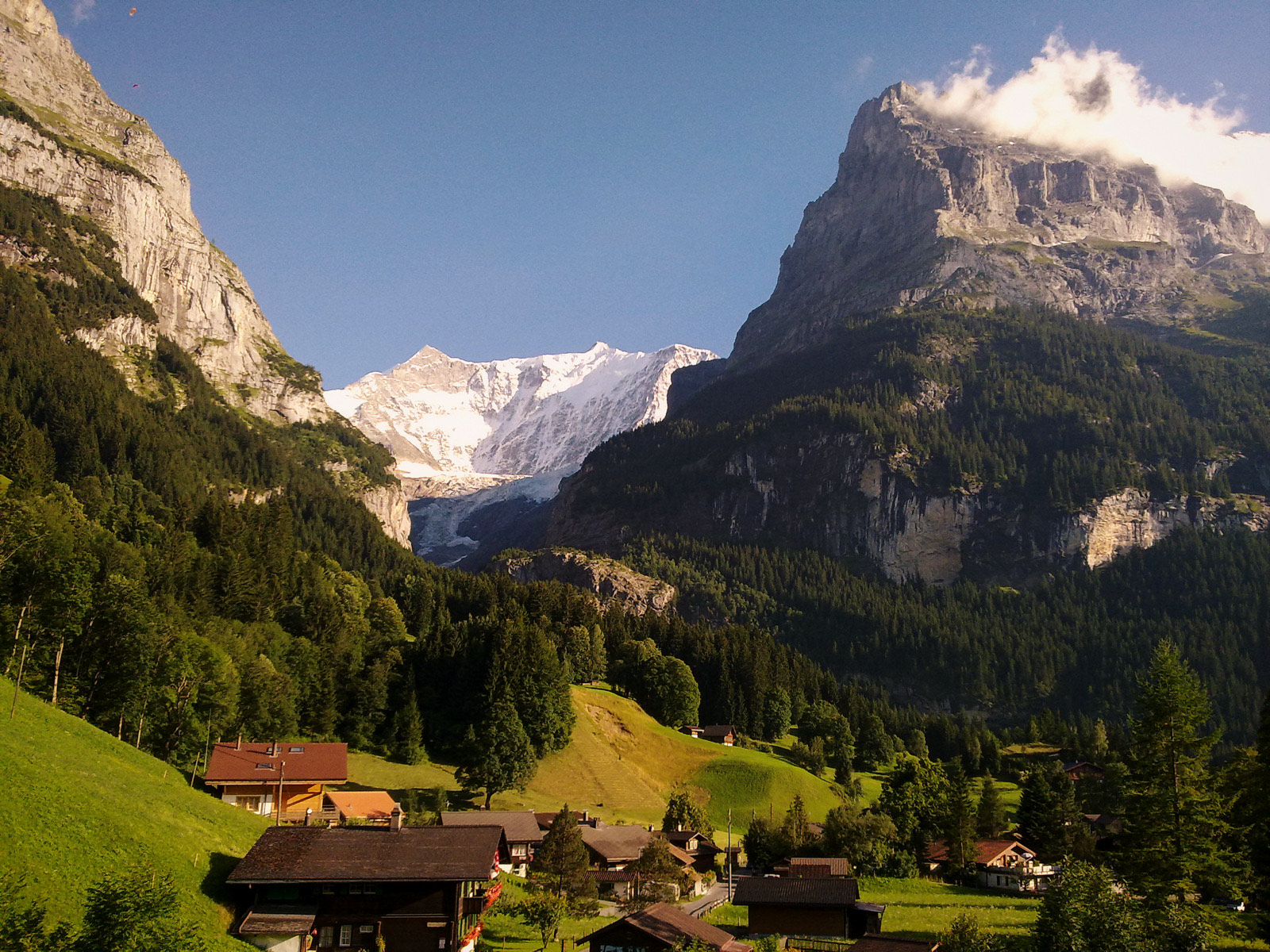
Same train, same pass, different turn at the bottom. Back over the Brünig to Interlaken Ost, then the other valley train — up to Grindelwald, a shelf of chalets sitting directly beneath the Eiger north face.≈76 CHF return
The gondola to Grindelwald First at 2,166 m. The Cliff Walk is bolted to the rock face at the top station — a steel walkway out over nothing, free once you have the lift ticket.≈72 CHF
The walk to Bachalpsee and back: an hour each way, near-level, on a wide gravel path. The lake holds the Schreckhorn and Wetterhorn upside down on a still morning and is the single best photograph in the Bernese Oberland. Mid-September is prime — the paths are dry, the crowds have thinned, and the larches are turning.
Come down the fun way if you want it — First Flieger zipline, Mountain Cart and Trottibike stack between First and Bort — or just ride the gondola back and walk Grindelwald's main street.
Swap First for the Eiger Express to the Eigergletscher station and on to Jungfraujoch, the highest railway station in Europe at 3,454 m. It eats the whole day and roughly 200 CHF on top, and it is only worth it on a clear forecast.
Back over the Brünig to Lucerne. Last night — the Altstadt again, or the lake promenade if the evening is warm.
Lucerne — night four of four.
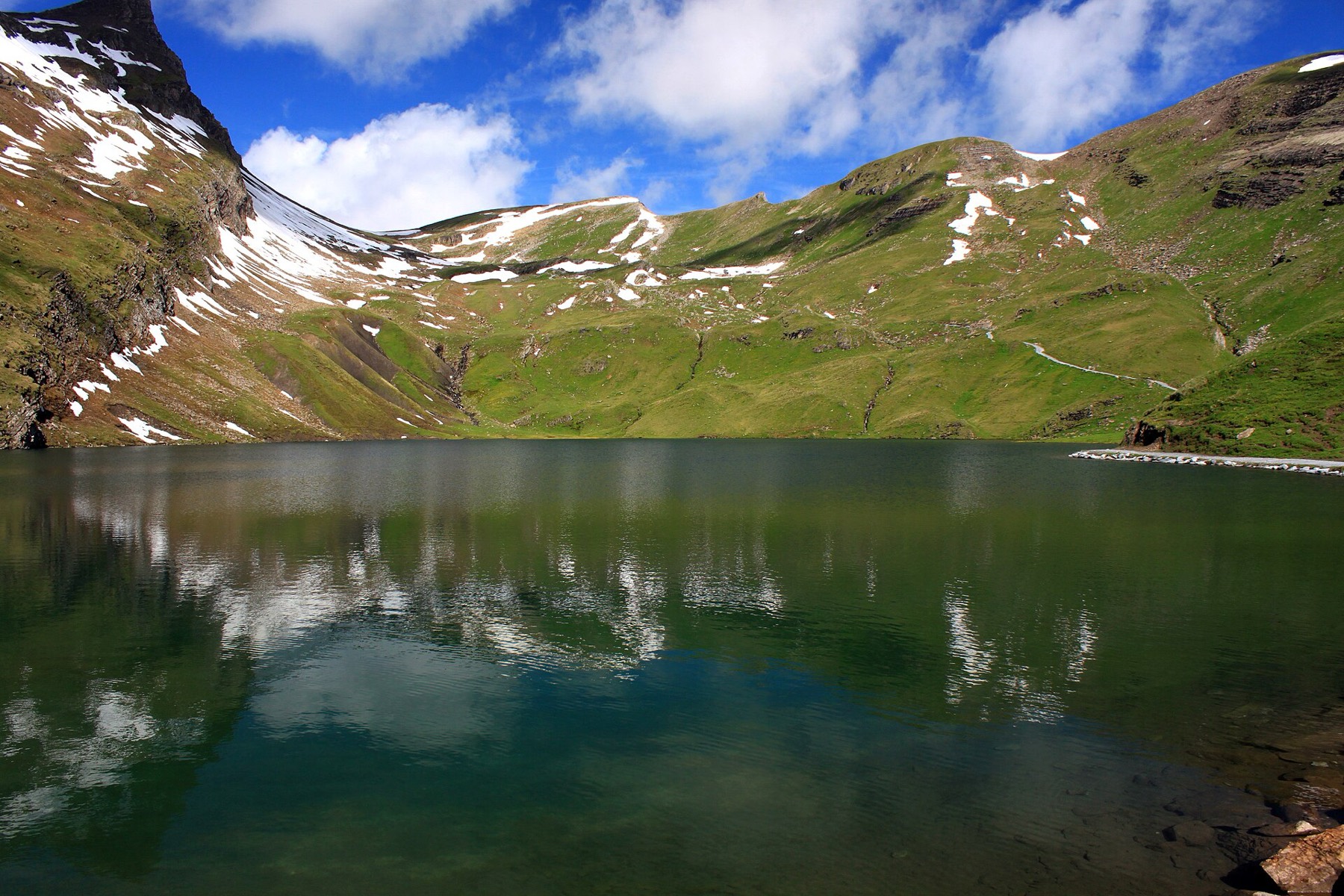
Bachalpsee · the walk
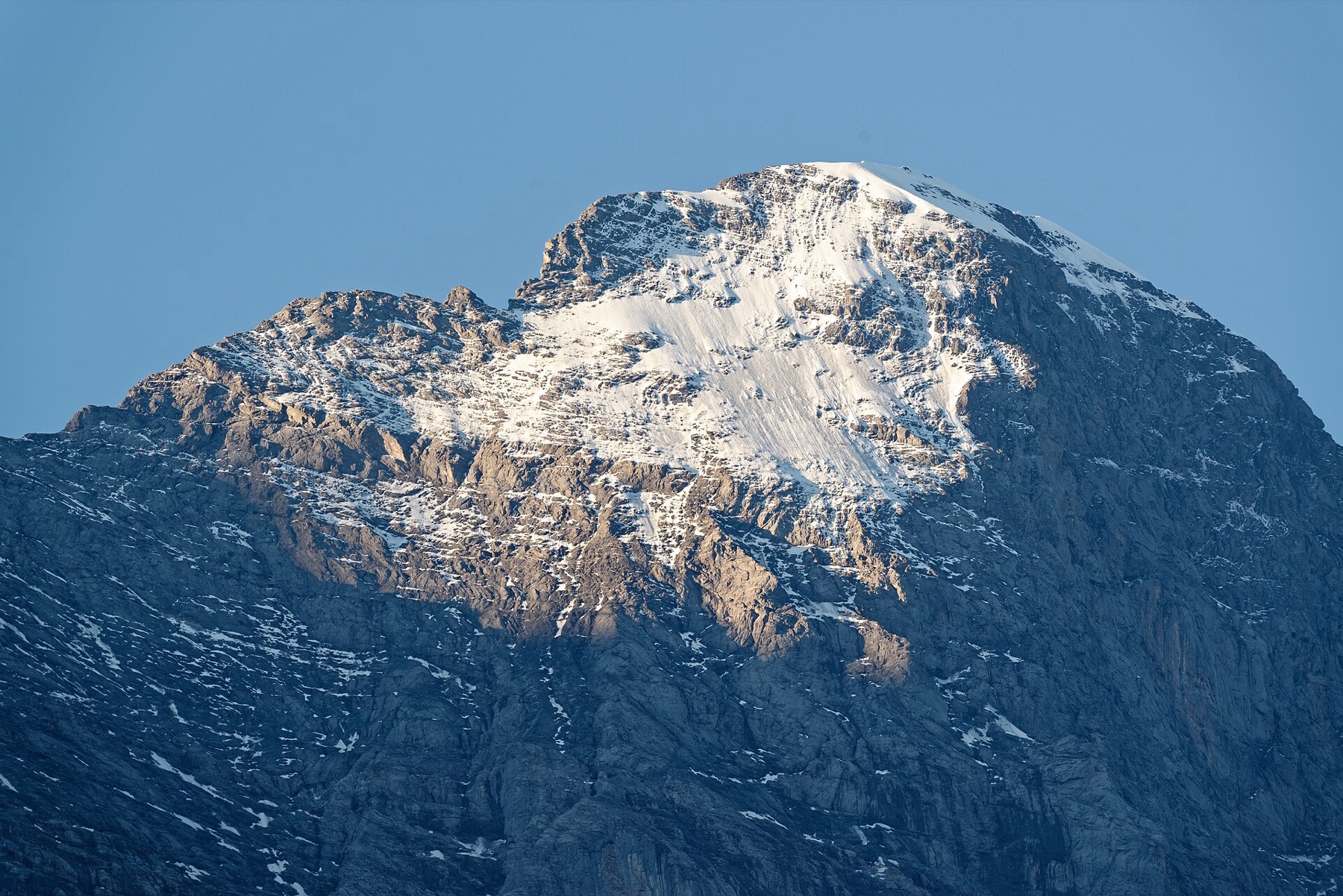
Eiger · north face
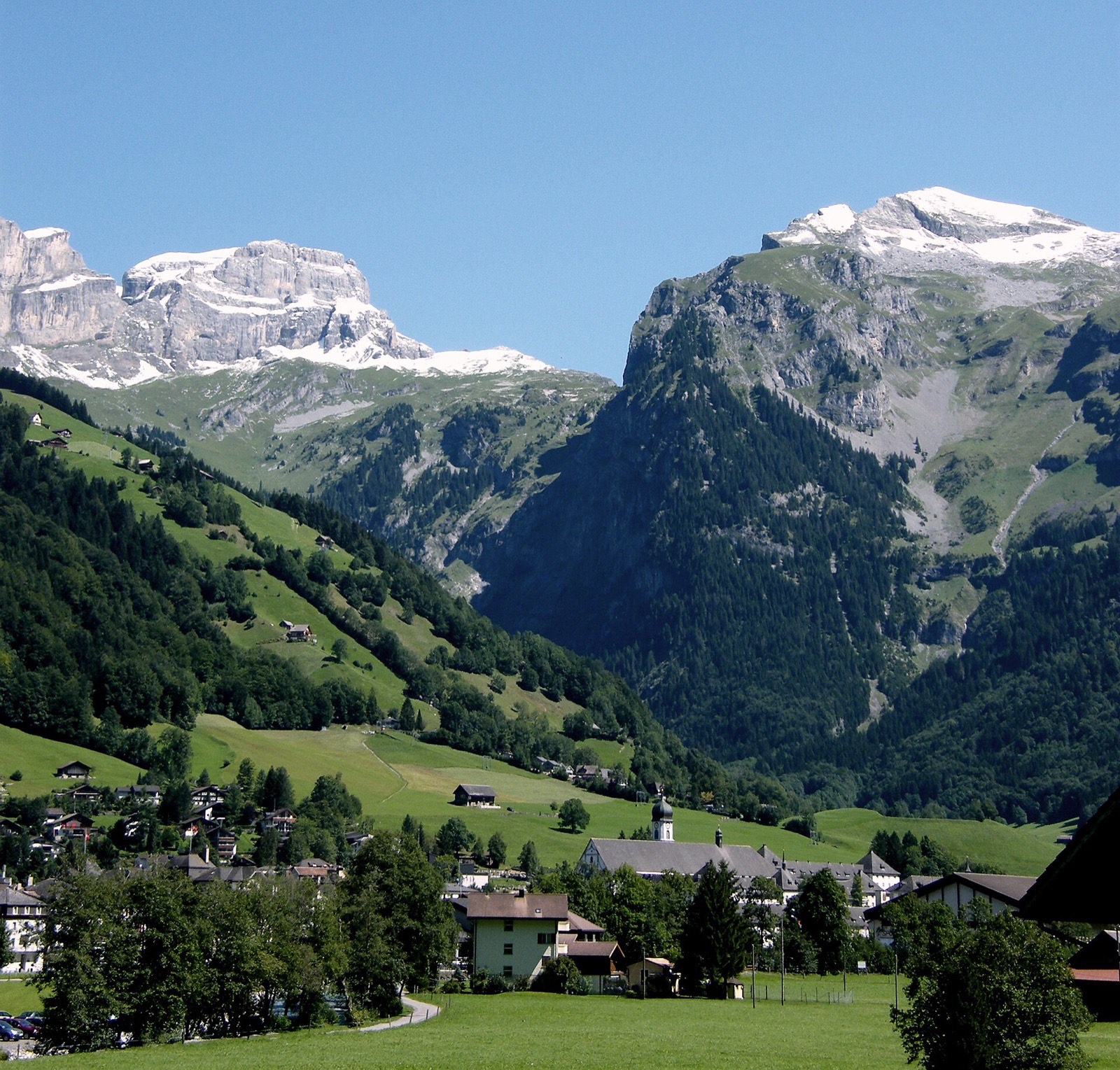
Engelberg · the swap
You have picked the good fortnight. First, Rigi, Schilthorn and the Jungfrau railways are all still on summer timetables; Pilatus's cogwheel section is running; the high walking paths are open and dry; and the July–August crowds are gone. The one thing that changes is daylight — sunset is around 19:40 in mid-September, so an alpine day that starts at eight ends comfortably, but a lift caught at four in the afternoon does not leave much light at the top.
Check out, bags to the station. Trains to Zurich HB leave twice an hour and take under an hour — this is the easiest leg of the whole trip.27 CHF
Lockers at Zurich HB, then straight out into the Niederdorf lanes on the east bank. The Grossmünster towers, the Chagall windows at the Fraumünster, and the Limmat between them — an hour covers all three at a walk.
Down Bahnhofstrasse to where it ends at the lake, and lunch at Bürkliplatz looking south. On a clear day the Alps are on the horizon — the ones you were standing on yesterday.
Collect the bags and take the S-Bahn to Zurich Airport — 10 to 13 minutes from the main station, four or more departures an hour, platforms 41 to 44.6.80 CHF
Be airside three hours before a long-haul departure. Working backwards, that means leaving Lucerne about five hours before the flight if you want the city, and three if you do not.
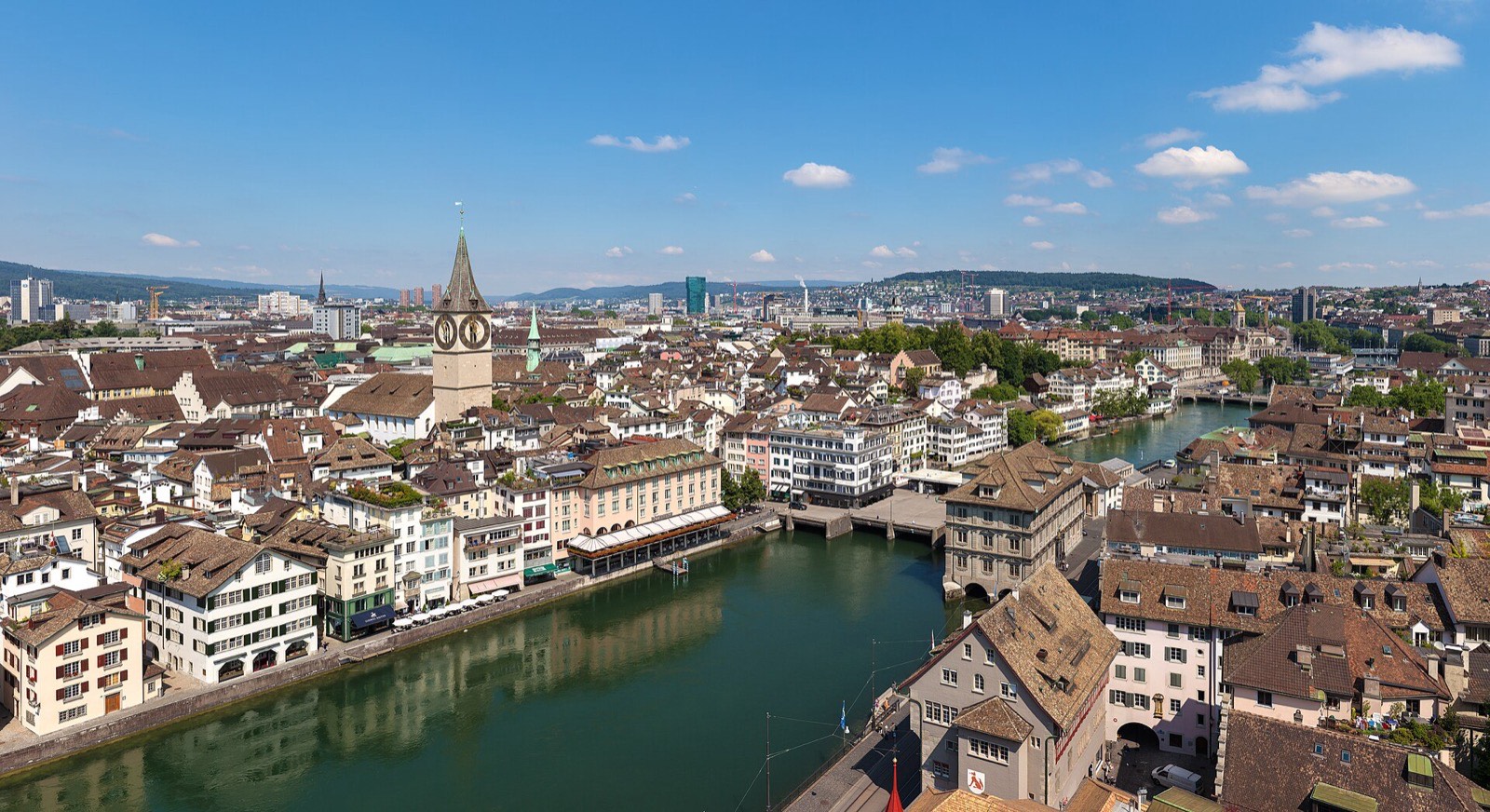
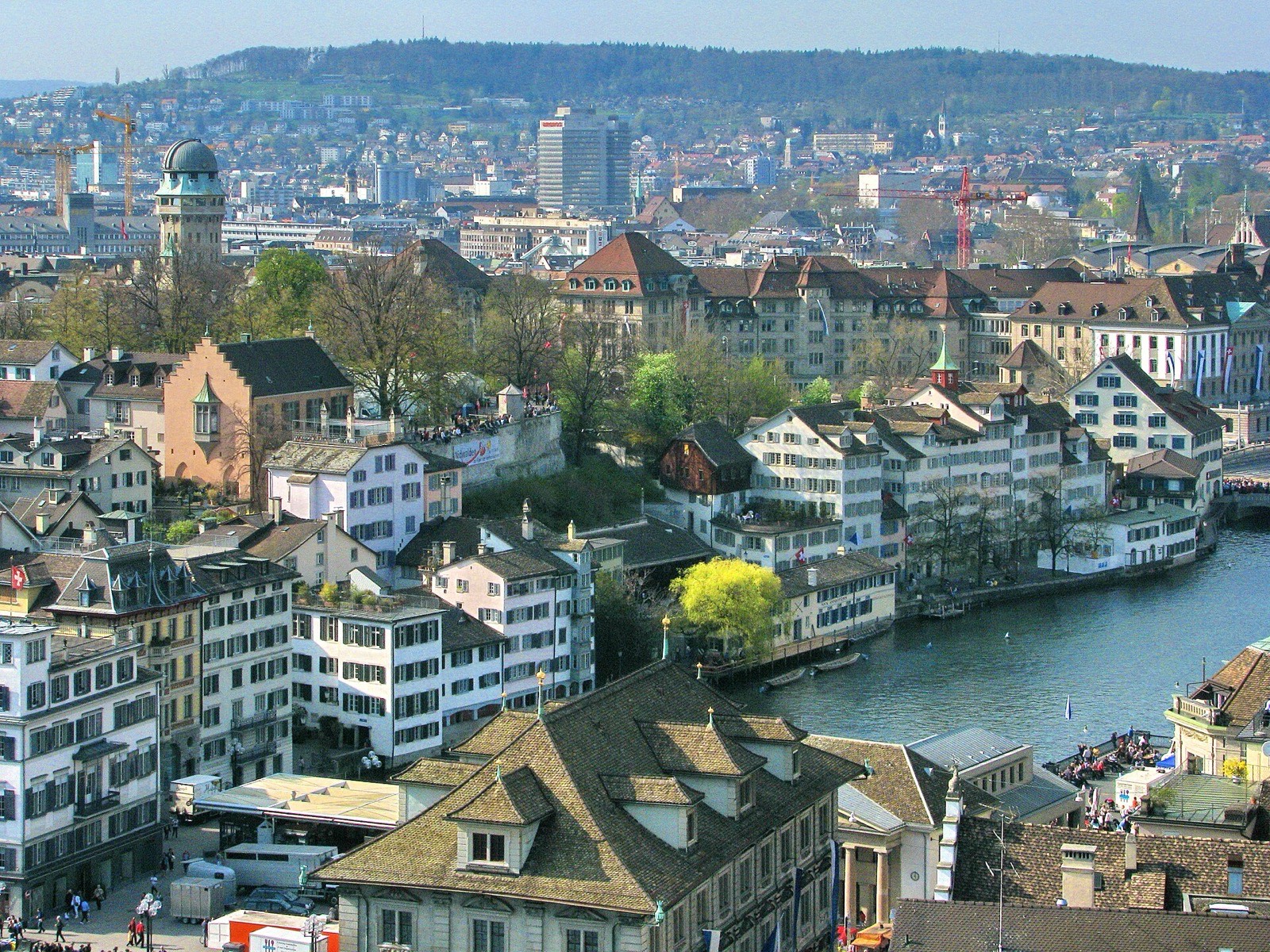
Niederdorf · old town
The Brünig · twice over
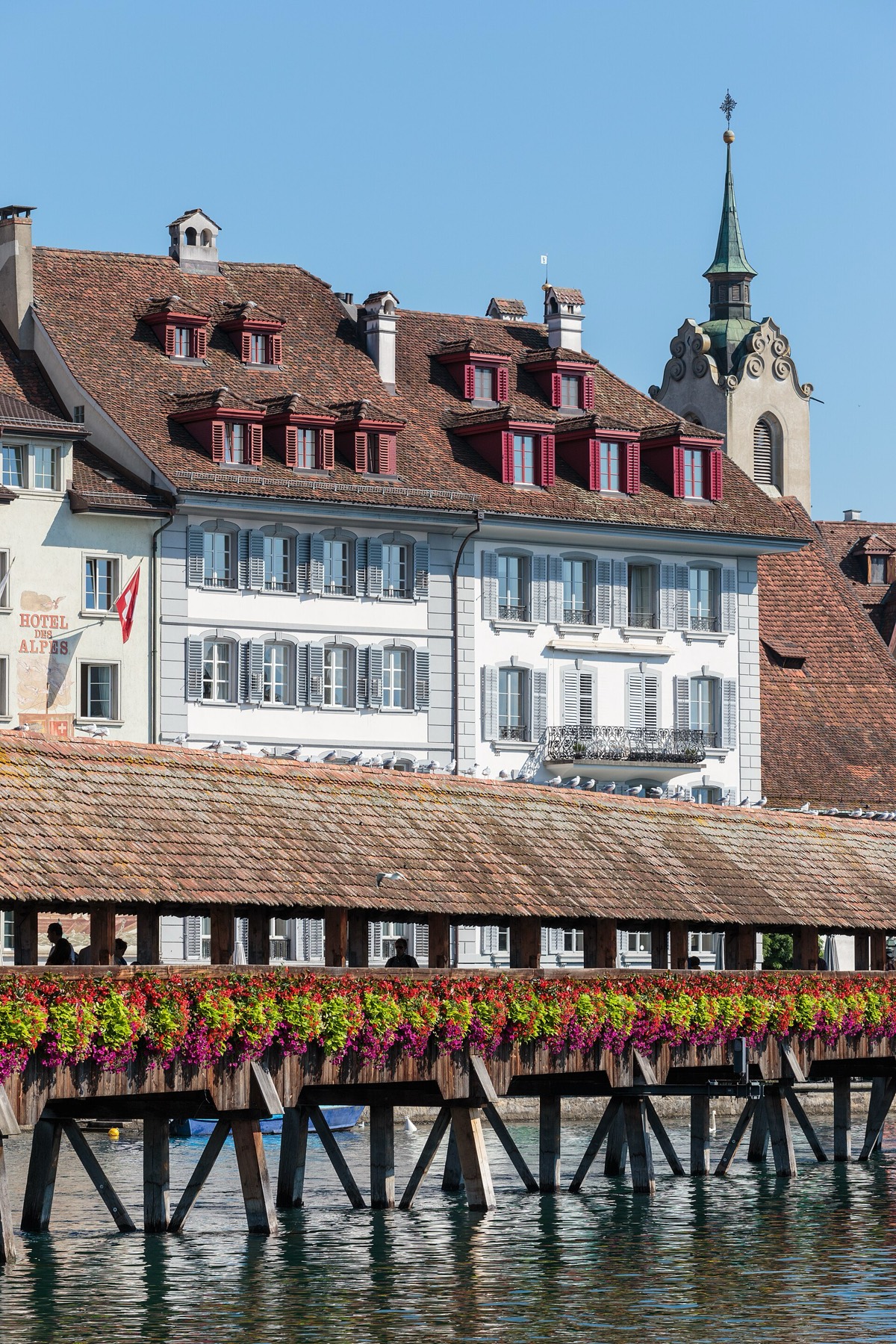
Lucerne · four nights
Short list. Most of Switzerland works exactly as advertised — these are the few places where it does not.
Check the live summit webcams at rigi.ch, grindelwaldfirst.ch and jungfrau.ch the night before, not a general forecast. A mountain day in cloud is a hundred francs for a white wall. Swap Days 2, 3 and 4 without a second thought — the base never moves, which is the whole point of this itinerary.
The SBB Mobile app is the only timetable you need, and it is accurate to the minute. Supersaver tickets are up to 70% off but lock you to one departure. Seat reservations are optional on almost everything here, including the Luzern–Interlaken Express.
Swiss francs, not euros. Cards work everywhere including mountain huts. Budget 25–40 CHF for a sit-down lunch, less if you do what the Swiss do and buy it at the Coop or Migros inside the station.
Layers, always — it can be 25°C in Lucerne and below freezing on Rigi Kulm the same afternoon. Shoes with grip for the ridge walk and the wet stone at Trümmelbach. Sunglasses and sunscreen above the tree line, where the snow reflects harder than you expect. A refillable bottle: public fountains in all three cities run clean drinking water.
Lock the Lucerne hotel first, all four nights, one reservation — it is the load-bearing decision and mid-September still books up. Then decide pass versus point-to-point. Mountain tickets need no advance booking at all; buy them on the morning you can see the sky.
All six are reachable from Lucerne or Interlaken on a day return, and any of them can replace a day in this plan without touching the hotel. The Bürgenstock is the sleeper pick — half an hour by boat and funicular from Lucerne, a level cliff path with the lake 500 m below, and almost nobody on it.